TuBata: Fit Over Merit
The right book for the right person at the right moment
A good recommendation isn't a "good book"—it's the RIGHT book for THIS person at THIS moment. TuBata is a fit-based book recommendation system that understands who you are, where you are, and what you need right now.

The Problem
Most recommendation systems optimize for merit or popularity. They'll suggest Nobel Prize winners and bestsellers, but they ignore:
- Your current state: Are you exhausted or energized?
- Your bandwidth: Can you handle complex prose right now?
- Your reading orientation: What makes a book feel "right" to you?
- Your dealbreakers: What absolutely won't work for you?
A prestigious book that doesn't fit your state is a worse recommendation than a "lighter" book that matches perfectly.
The Solution: Five Layers of Intelligence
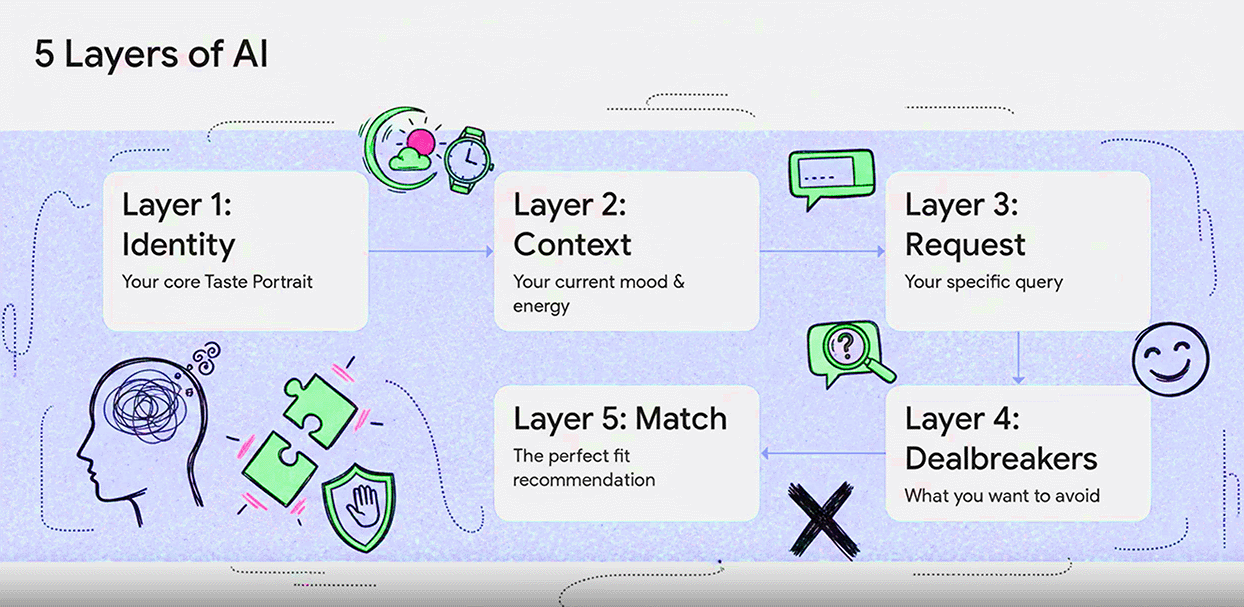
TuBata uses a sophisticated 5-layer architecture to deliver fit-based recommendations:
1. Intake Layer
Processes natural language (including Hinglish) and extracts signals:
- • Explicit: "I'm exhausted, need something light"
- • Implicit: Detecting mood from phrasing and word choice
- • Context: Bandwidth, energy level, reading mode
2. Identity Layer
Maintains a persistent model of who you are:
- • Permanent Self: Cognitive baseline, value anchors, dealbreakers
- • Narrative History: Books you loved, DNFs, emotional patterns
- • Aspirational Self: Growth goals and when NOT to push growth
- • Taste Portrait: Prose-based description of your reading orientation (~300 words, first-person)
3. Context Layer
Captures your real-time state:
- • Bandwidth (mental capacity)
- • Energy (physical/mental)
- • Mood (emotional state)
- • Reading mode (when/how you'll read)
4. Judgment Layer
Core reasoning engine that scores books based on FIT:
- • Filters candidates using context and dealbreakers
- • Scores using identity alignment, narrative patterns, and novelty
- • Generates rationale anchored to YOUR state, not generic merit
- • Selects primary recommendation + alternatives + stretch option
5. Delivery Layer
Transforms judgment into natural conversation:
- • Adapts to your language (English or Hinglish)
- • Explains WHY this book fits right now
- • Offers follow-up options
Hinglish Support
TuBata understands and responds in Hinglish naturally:
Technical Innovation
GraphRAG for Narrative Understanding
- • Extracts entities and relationships from conversations
- • Builds a semantic graph of your preferences
- • Uses embeddings for retrieval (text-embedding-004)
LLM-Powered Reasoning
- • Primary: Gemini 2.0 Flash (validated in Phase 0)
- • Fallback: GPT-4o-mini, Claude Haiku
- • Every layer uses LLMs with rule-based fallbacks
Book Profiling
- • VoiceDNA dimensions (kinetic energy, register, emotional palette)
- • Experiential dimensions (cognitive load, closure type)
- • Anti-persona triggers (potential dealbreakers)
Cost-Optimized Architecture
- • Intent routing skips expensive LLM calls
- • Response caching with TTLs
- • Per-user cost tracking and budget alerts
Scale of One in Action
TuBata demonstrates the "Scale of One" thesis in practice:
Traditional Approach
- Team: 4-6 engineers across 5 specialized roles
- Timeline: 6-9 months
- Effort: ~800 engineering hours
- Cost: $400K-600K
Actual (Scale of One)
- Team: 1 person + AI as collaborator
- Timeline: 10 days
- Effort: 50 hours
- Cost: $500 in AI credits
Complexity Achieved:
- • 743-line technical architecture document
- • 5 distinct layers with clear responsibilities
- • GraphRAG implementation with semantic search
- • 50+ API endpoints, 100+ React components
- • Production-grade security and monitoring
This Is What Scale of One Means: AI didn't just make development faster—it collapsed the entire cost structure. One person can now build what previously required a full engineering team, in a fraction of the time, at a fraction of the cost. Not prototypes. Production systems.
Features
Core Experience
- • Natural language chat interface
- • Fit-based recommendations (not merit-based)
- • Context-aware suggestions
- • Hinglish support
- • Taste portrait (editable prose description)
Library Management
- • Reading lists
- • Personal notes and reviews
- • Series tracking with progress
- • Goodreads import
- • Visual book grid
Smart Features
- • Command palette (Cmd+K) for global search
- • Keyboard shortcuts
- • Activity hub with recent conversations
- • Stretch recommendations (growth-oriented)
- • Alternative suggestions
Architecture Highlights
Technology Stack
- • Next.js 16 (React 19, Tailwind CSS 4)
- • Firebase (Firestore, Auth, Hosting)
- • Google Gemini 2.0 Flash
- • TypeScript + Zod for type safety
- • Vitest + Playwright for testing
Data Architecture
- • Firestore collections: users, books, profiles
- • Subcollections: narrative graph (entities, relationships)
- • Vector indexes for semantic search
- • Composite indexes for complex queries
Current Status
Recent Milestones
- • Taste Portrait feature (prose-based reading orientation)
- • GraphRAG narrative extraction
- • Command palette and keyboard shortcuts
- • Visual library with book grid
- • Comprehensive design system
What's Next
- • Non-linear conversation threading
- • Log Book Flow
- • Smart Queue
- • Mood Browse
- • Advanced analytics and diversity metrics
Try TuBata
Experience fit-based book recommendations powered by AI. Find the right book for you, right now.
Open TuBata